
Should you keep the appointment after heavy rain?
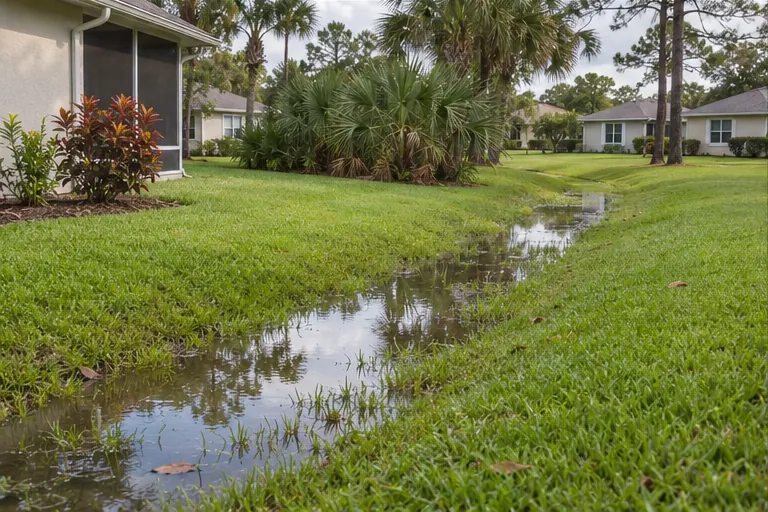
Before arranging septic testing after heavy rain, tell the evaluator what the yard looks like. Rain at Melbourne airport, water standing in the roadside swale and water standing over the drainfield are three different observations. A shower overnight does not tell you whether the field is saturated. If sewage is backing up or the field is flooded, stop trying the fixtures, cut household water use and call for professional help. A routine flow demonstration can wait.
A typical drainfield needs unsaturated soil to accept and treat wastewater. When groundwater rises into that space, the system can have trouble accepting the household’s usual flow. A failed pump after a power outage can produce similar indoor symptoms for a different reason. In a storm advisory for Brevard residents, the county health department specifically calls out dosing pumps, aerators and grinder pumps that depend on electricity. Tell the evaluator whether the property lost power as well as when the rain began.
Why a September visit can look different from a February visit
The nearest long-running climate station gives some context. At Melbourne International Airport, normal rainfall for September is 7.63 inches. For February it is 1.98 inches. Together, June through September account for 27.90 inches of the station’s 50.79-inch normal year, about 55 percent. Those are National Oceanic and Atmospheric Administration (NOAA) 1991–2020 climate normals for station USW00012838. They describe the regional calendar. They cannot tell an inspector what happened in a particular Palm Bay backyard overnight.
| Melbourne station | Normal monthly rain | Normal days with at least one inch |
|---|---|---|
| February | 1.98 in. | 0.6 |
| June | 7.10 in. | 2.6 |
| September | 7.63 in. | 2.1 |
What does that change for a buyer? If a seller says the shower backs up only in summer, a February visit with no backup leaves the summer complaint unresolved. Ask for dated photographs, dates of calls for service, the location of any ponding and whether the house was occupied at the time. A photo showing a wet patch beside a swale has a different meaning from a photo tied to the drainfield drawing. Give both the evidence and the drawing to the evaluator.
What to record safely from dry ground
- The first sign. Did toilets gurgle before you saw water in the yard, or did the low end of the yard fill before any fixture slowed? Write down the order, including any alarm or power interruption.
- Where it happened. Describe the location by a fixed feature such as the rear porch or the driveway. Identify whether that location matches the permitted field or an old field on a prior plan.
- Where runoff goes. From a safe spot, note whether a downspout discharges toward the area or whether surface water flows in from elsewhere. The evaluator can check these clues against the system location.
- What changed afterward. Record when the yard drained, whether the fixtures returned to normal, and if the same symptoms happened after an earlier storm. Include dates rather than a general description such as “every so often.”
Keep children and pets away from standing water that may contain sewage. Do not remove a lid, enter floodwater to take a closer photo, or drive equipment over the field. The Centers for Disease Control and Prevention’s flood guidance explains the contact risk. If a private well also flooded, ask the health department about drinking-water testing. A septic evaluation cannot establish that well water is safe.
Why pumping is the wrong first move in saturated ground
Do not pump out a tank while the field is flooded or the surrounding soil is saturated. The U.S. Environmental Protection Agency (EPA) warns that emptying it under those conditions can let the tank shift or float, damaging its connections. A truck also puts weight on soft soil. Call a qualified service provider, describe the site conditions and let them decide when assessment and service can safely proceed. EPA’s post-flood instructions distinguish the saturated period from the later inspection and cleaning that may be needed after floodwater recedes.
Does rain explain a poor result?
It may help explain it. It cannot establish the cause by itself. Ask where water was found: in the tank above the expected operating level, in a distribution component, in the field, on the surface or inside the house. Ask whether that finding was present before any water was introduced. A local downpour can saturate the ground, but photographs of a broken baffle, a pump without power or a pipe obstruction still need their own explanation. One property can have more than one problem.
If the owner says water drains normally again, pass that information along. The evaluator might want to inspect once the site is accessible, review stormwater drainage, or compare the findings with a visit under different conditions. Ask which observations would change their recommendation. There is no reliable countdown from the end of a storm that applies to every lot. The important dates are the storm, the symptoms, the inspection and any follow-up.
What to request in the report
Ask for the observed ground conditions, accessible components, any limits on testing and the recommended follow-up. If a loading test was deferred, request a note explaining why and what evidence could still be collected. When a purchase deadline is approaching, send that note to the people handling the transaction. A decision about the deadline belongs in the transaction record. A guess about what the field might do next week does not fill the gap.
Questions about septic testing after heavy rain
How many dry days should we wait before a septic test?
There is no fixed interval for every lot. Tell the evaluator where water remains, whether fixtures are backing up and whether the site lost power. The field condition and safe access determine the timing.
Can a dry-season inspection settle a complaint about summer backups?
It can document the system as found and identify some defects. Give the evaluator dated wet-season records and ask what remains unknown about performance during high groundwater.
The swale has standing water. Does that mean the field has failed?
A wet swale alone cannot establish field failure. Use the system drawing to locate the field and have an evaluator distinguish stormwater from wastewater and record the observed conditions.
For septic testing after heavy rain, tell the evaluator where the water stood and what the fixtures did before you set the visit date.