
Decide which part of the system you need checked
For septic flow testing, ask the evaluator to finish this sentence. “I will watch water at ___, and the result will tell us ___.” A fixture check inside the house, an observation at the tank inlet and a measured test of the absorption area describe three different jobs. The difference matters when your lender wants a written assessment or your shower backs up only during a big laundry day.
Bring the exact request. An email from the buyer’s agent might say “check the drainfield.” The actual contract addendum might also call for pumping and an inspection report. Forward the wording to the provider before scheduling. Ask whether the person signing the report can document each requested item and what happens if a component cannot be reached on the day.
Follow the water past the last fixture
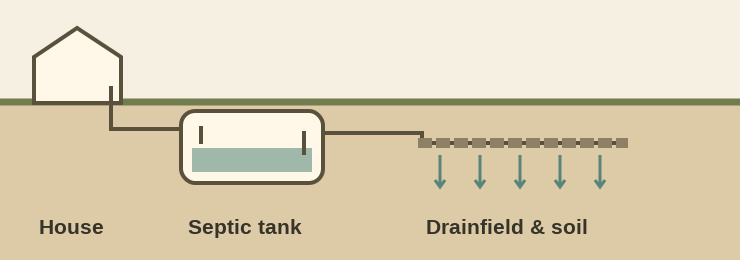
In a conventional gravity system, wastewater reaches the septic tank first. Solids settle and a floating layer forms at the top. Liquid passes through the outlet to a field of buried trenches or a bed. The wastewater then moves through soil. The tank can accept water while the household is using a sink even if nobody has confirmed where the field lies. The ground and the distribution components deserve their own observations. EPA’s illustrated explanation of the flow path.
A recently pumped tank makes that distinction easy to picture. If the liquid begins below the outlet, some added water may simply fill the available space. The observer can see water reach the tank without knowing how the field would respond to the same volume. Ask the professional to record where liquid stood before they began, the route water took, the observations made in the yard and the parts of the system they could not examine.
When a measured hydraulic load test comes up
An evaluator may discuss applying a known quantity of water to the absorption area and measuring how that area takes it up. Find out what starts the clock, where levels will be observed and whether the quote includes a second visit. Absence of a visible puddle is a different observation from an actual level measurement at a known point. Both the starting conditions and the elapsed time give a result meaning.
You may see listings online for a particular state’s number of gallons or its required vacancy period. For example, the Pennsylvania Septage Management Association has its own protocol for conditions such as prolonged vacancy and a recently pumped tank. Florida publishes a voluntary evaluation procedure for existing systems. If your provider proposes a separate load test in Palm Bay, ask for the method and its reason at your particular property. A Pennsylvania protocol does not establish a Florida requirement. PSMA’s description of its method. Florida DEP’s voluntary procedure.
What changes the price of the visit?
| Quote item | What to check before authorizing it |
|---|---|
| Tank access | Ask who locates and exposes the lids, how difficult access affects price and whether the quote covers restoring the opening. |
| Pumping | Ask whether the truck and disposal are included, and whether this property has a second tank or pump chamber. |
| Field assessment | Ask how the absorption area will be located, which observations are planned and whether a separate measured load test is proposed. |
| Written findings | Confirm who signs, which photos or diagrams are available and when you can expect the document. |
| Return visit | Ask what happens to the fee if a locked gate, flooded yard or inaccessible component prevents completion. |
Compare the same scope across providers. Someone quoting only a visual visit can come in well below a quote that includes pumping, field observations and a return trip. Make each provider mark the items included on the same list. Ask them to separate any later repair estimate from the charge to investigate the original issue.
Prepare the address, the dates and access
Send the full street address including the Palm Bay direction suffix. Add the parcel reference if two neighboring lots share a driveway. The sketch attached to a permit may be a better guide than the seller’s memory of the tank. Brevard Environmental Health lists a historical records search and its instructions. Start there with the street address, then ask the office for help if the old description uses a subdivision, lot and block instead. Brevard permit records.
Make a short timeline. Include when the house was last occupied, any recent pumping invoice, when the first symptom appeared and whether it followed heavy rain or unusual indoor water use. If there is an alarm panel, tell the provider what you saw or heard. Have the owner arrange permission and clear a path to the work area. Keep lids closed and leave any excavation or opening to the professional.
Get an answer you can use
Before the evaluator leaves, ask which question the evidence settled. A level recorded before and after a measured observation, with date and conditions, is something another professional can interpret. A recommendation to get the pump checked is actionable if the report identifies the pump, states what it did and names the next trade to contact. Keep the report with the permit drawing. You now have a starting point if a symptom returns under different weather or occupancy.
Find the guide for your property
Use the local records and utility guide before arranging access with the property owner.
- Barefoot Bay
- Bayside Lakes
- Easy Street area
- Floridana Beach
- Grant-Valkaria
- Indialantic
- June Park
- Lake Washington
- Little Hollywood
- Lockmar Estates
- Malabar
- Melbourne
- Melbourne Beach
- Melbourne Shores
- Melbourne Village
- Micco
- Palm Bay
- Satellite Beach
- Timberlake Drive
- Turkey Creek
- West Melbourne
Questions about septic flow testing
Does a fixture flow check include the drainfield?
Only if the written scope says which parts of the field the evaluator will examine. Ask whether anyone will locate the absorption area, observe it directly and document its response. A sink that drains freely tells you much less.
Can I arrange testing when the seller had the tank pumped this week?
Yes. Send the invoice and date first so the evaluator can decide which observations are still meaningful, which records qualify under Florida’s procedure and whether a return visit would help.
Does a flow test include testing my well water?
Ask for well sampling separately. A wastewater flow observation cannot measure bacteria or other contaminants in drinking water. For a closing, obtain the recipient’s sampling requirements before ordering.
What if water begins backing up before the appointment?
Reduce water use and contact a service professional about the active backup. Tell the evaluator that the property’s condition has changed so they can reassess the planned visit.
When you request septic flow testing, agree in writing on the observation point and the question the result can answer.