
Read the scope before the verdict
Turn first to the date, street address and signer. Then find the tank, the drainfield, and any pump or alarm listed for that property. For each one, mark whether the evaluator saw it, relied on a record, or left it outside the visit. If the conclusion sounds broad and that list looks short, ask the evaluator to reconcile the two while they still remember the job.
Florida’s voluntary inspection procedure calls for a signed report to the requester and the system owner. Its front cover should state the evaluator’s opinion about whether the system constitutes a sanitary nuisance. The report should identify needed maintenance and conditions the evaluator could not assess because of written exclusions. A useful next step is to place the report beside the agreed scope and see whether you can trace each conclusion to an observation. Florida DEP’s report and disclosure provisions.
Decode the tank entries
“At outlet level.” In a working gravity system liquid normally reaches the height of the outlet. The tank holds wastewater long enough for solids and floating material to separate. The liquid level by itself tells you little about how much sludge has built up, whether a baffle is intact or how the field performs. Look for separate entries for those items. A sketch of the inlet, outlet and measured level can clear up what “full” meant in a conversation. How the tank and field work together.
“Capacity estimated” or “capacity documented.” Check the source. An installation record may list design capacity. An evaluator may document capacity through inspection or accept qualifying recent paperwork under Florida’s pumping provision. A pumping ticket that says only how many gallons were hauled may reflect how much was in that tank that day. Ask which document the evaluator used and whether there is a separate pump chamber, an additional tank or a compartment that could not be reached.
“Baffle damaged.” Locate it on the sketch. Was it the inlet or outlet? Was a filter present? Request a description of what the evaluator observed and which part they recommend correcting. Keep that finding intact when asking for estimates. Replacing an outlet component and rebuilding a drainfield are different pieces of work. If a contractor proposes both, ask what evidence supports the second job.
Read the yard as carefully as the tank
A strong field entry tells you approximately where the absorption area lies, whether it is arranged as a bed or trenches where identifiable, and what the evaluator found. Read the difference between observations made on top of the grass and observations made within the field. Ponding means liquid was observed accumulating. If the report records ponding, ask how much of the field was affected, at which observation points and under what conditions. Those details give a second professional a place to start.
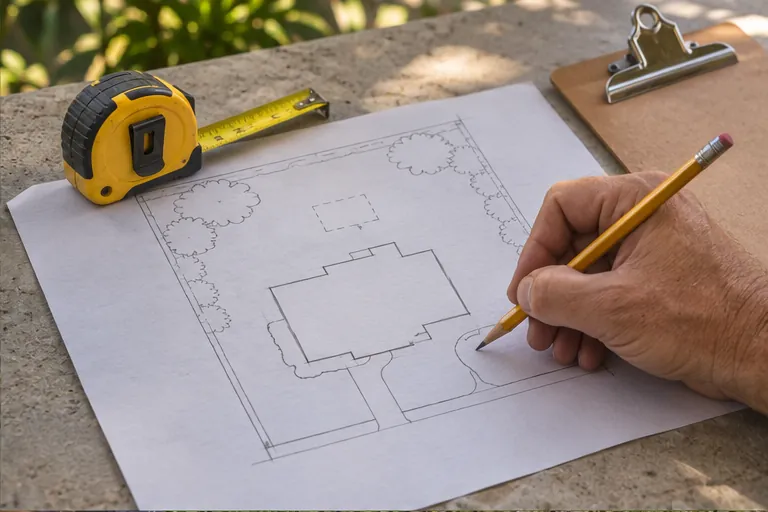
Look for roof downspouts, a yard drain, a recently paved area or features that restrict access for future repairs. A photo of a downspout aimed toward the field is useful, especially if the problem occurs after storms. Ask what corrective action the report recommends and which observations warrant a second look after the drainage changes. An illustrator’s arrow on the old permit sketch is a proposed location. A field note showing the path actually seen carries a different kind of evidence.
Another entry may refer to the seasonal high water table. That estimate describes how high groundwater tends to rise. The yard can look dry on the inspection date while soil markings suggest higher levels during wetter conditions. If water reaches the elevation of the field, Florida’s reporting procedure calls for recording the increased risk of malfunction. Ask how the evaluator established the field’s elevation and what the observation means for the repair or follow-up they recommend. University of Florida’s explanation of soil treatment.
Use the limitations to choose your next step
| Words you might see | Question to take back to the evaluator |
|---|---|
| Tank pumped before visit | Which observations are based on the pumping record? Which could you still make directly? |
| Inaccessible or not located | Which component is missing from the assessment and what access, records or equipment would allow a return? |
| Alarm present | Was it also tested? Which signal worked, and where would someone in the house notice it? |
| Prior failure indicators | What physical evidence did you see? What did the owner report separately? |
| Repair recommended | What defect needs correction, how urgent is it and which professional should assess the next stage? |
A follow-up note that gets a useful answer
Try this wording. “On page two you recorded ponding in one observation point. Could you mark that point on the drawing, tell me what you saw at the other points and say whether this recommendation depends on what happened after the recent rain?” You are asking the evaluator to explain their own evidence. They may be able to answer from the field notes, or they may recommend returning when conditions change.
Save their response with the original signed report and date both. Send the relevant finding and the same site sketch to each contractor quoting follow-up work. If the issue involves new or modified construction, ask Brevard Environmental Health about the permit file before treating a private assessment as approval. Someone revisiting the property a year later can then distinguish the original defect, the work that was approved and the condition after repair. Brevard septic records and permitting contacts.
Questions about septic inspection report
My report says the field was dry at the surface. Is the field healthy?
Dry grass is one surface observation. Read how the field was located, which subsurface observations were made and whether recent vacancy or pumping limited the visit. Ask the evaluator how those details affected their conclusion.
What does ‘seasonal high water table’ mean in the report?
It refers to how high groundwater tends to rise seasonally. An evaluator can look for soil evidence that persists after the water falls. Florida’s voluntary procedure calls for identifying increased malfunction risk when that level is at or above the field elevation.
What should the report say if I agreed to omit the tank inspection?
The written report should identify which conditions could not be assessed because of the limited scope. Ask for a copy of the signed scope and keep it with the findings so future readers know what was excluded.
Can I use the signed homebuyer report to approve a repair?
Give the report to the contractor and Brevard Environmental Health as background. Repair permitting and inspections follow their own processes. Confirm the approvals appropriate to the proposed work before it starts.
Keep your septic inspection report with the parcel drawing and dated photographs so a second evaluator can locate the same component.